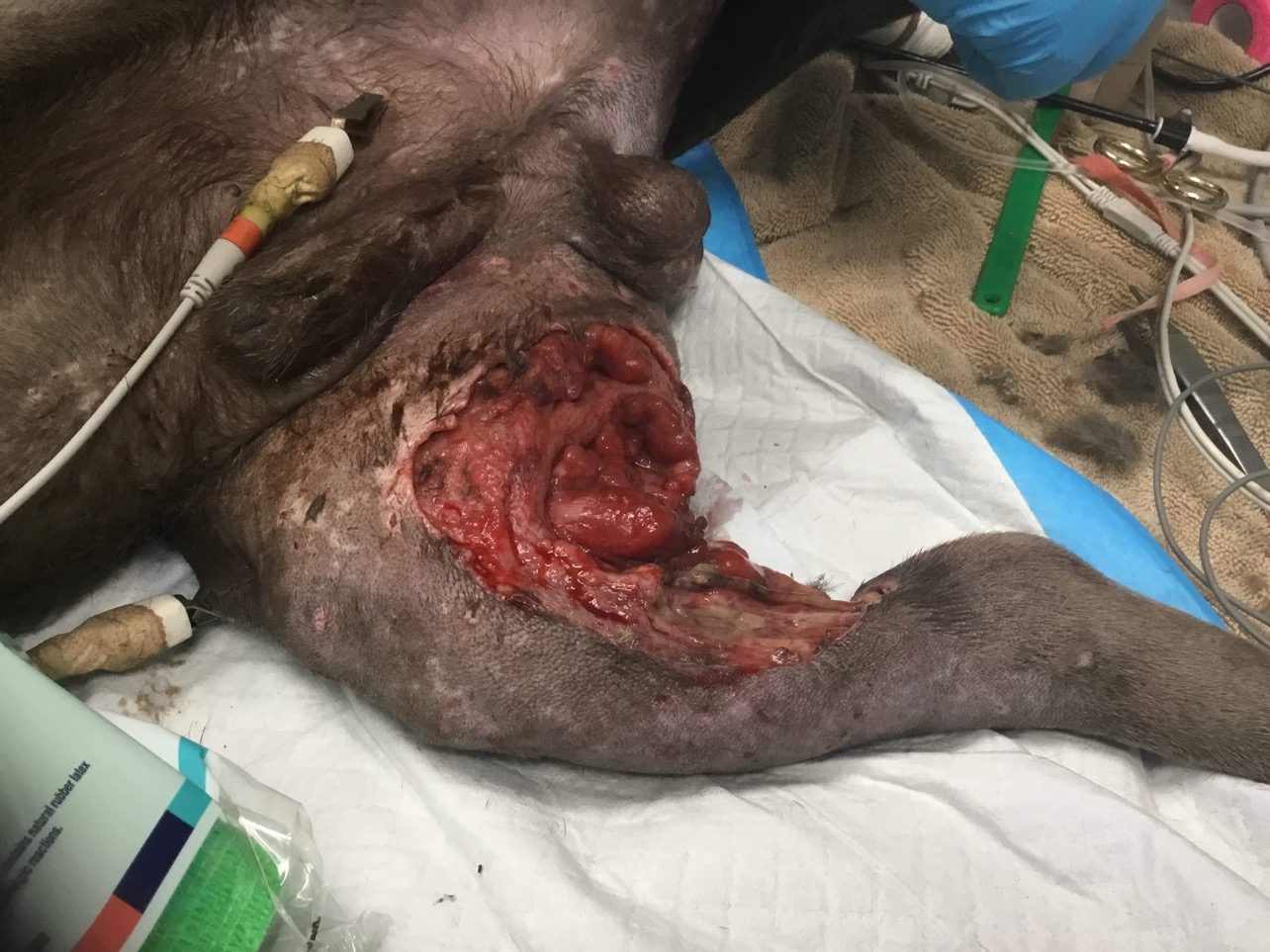
In the summer of 2020, and several states away, Dr. Green was practicing at an emergency veterinary hospital referral facility. In a busy emergency hospital, triages occur several times a day, so Dr. Green wasn’t surprised when a veterinary technician came running through the door yelling “Triage.” What the technician carried through the door was a limp pit bull who appeared to be deceased. He was covered in dried blood, dirt, pus and fly activity. Maxi pads and acne astringent pads were taped over some of his wounds.
The team reflexively worked to secure an airway and an IV catheter but, with no visible respiration or signs of consciousness, the veterinary team was concerned it was too late to help him. As Dr. Green listened for a heartbeat, he made a small gasping sound. Gasping sounds are often normal in the minutes before and after an animal’s passing. Thankfully, he was not deceased. Faint heartbeats were indeed present.
An airway was secured to help this patient breathe. Unfortunately, placing an IV catheter proved quite difficult due to his low blood pressure (from blood loss and septic shock) and the severe shredding of the skin and soft tissues of his legs. Placing an IV catheter generally takes seconds, but it took over 30 minutes to find a usable vein.
He was in septic shock, a critical condition where infection has spread throughout the body, creating low blood pressure and organ damage/failure. He was placed in the hospital’s intensive care unit and started on IV fluids, antibiotics and pain management. His blood pressure, tissue oxygenation, heart rate, respiratory rate and temperature were continuously monitored. Temporary bandages covered the wounds while the team waited to see if his vitals would stabilize.
Hour by hour, he continued to fight. After 12 hours, he started to show signs of consciousness. Approximately eighteen hours after arrival, he licked Dr. Green’s hand as she petted the bridge of his nose (the only portion of his body not covered in wounds).
Unfortunately, we weren’t able to share this victory with his owners. Minutes after his arrival, when Dr. Green went to speak with them regarding his condition, no one was present. The individual who attested to be his owner and approved treatment had disappeared. The only history we had was that the dog had been lying, unresponsive, in someone’s backyard for over 2 days after having been attacked by two larger dogs. Outside temperatures had been over 100°F for the past week.
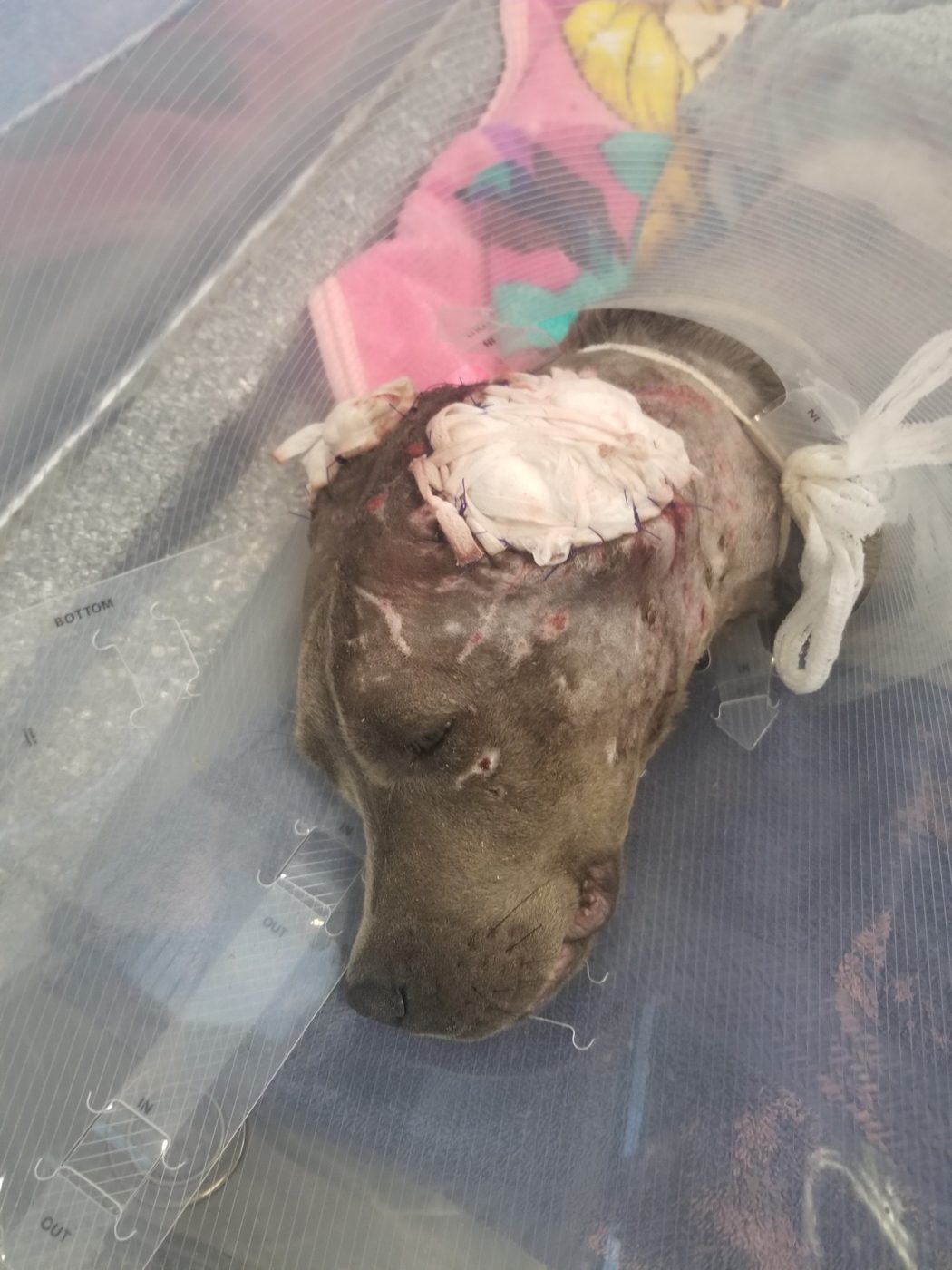
We continued his medical support for another 24 hours while attempting to find the owners. Despite being unable to stand or walk, he started to eat and drink for us. Unfortunately, even with broad-spectrum antibiotic therapy, his right rear leg and ears were succumbing to gangrene.
Around this time, we also managed to be in contact with the owners and received the heartbreaking news: they declined any treatment and elected euthanasia. Our hearts sank. How could this be the end for this sweet boy who had fought so hard? He had already defied so many odds. Unanswered questions about how he had been injured and his subsequent abandonment puzzled the team. They discussed transferring care and ownership as an alternative to euthanasia. The owners accepted. The plan was for Dr. Green to foster this patient while tending to his injuries.
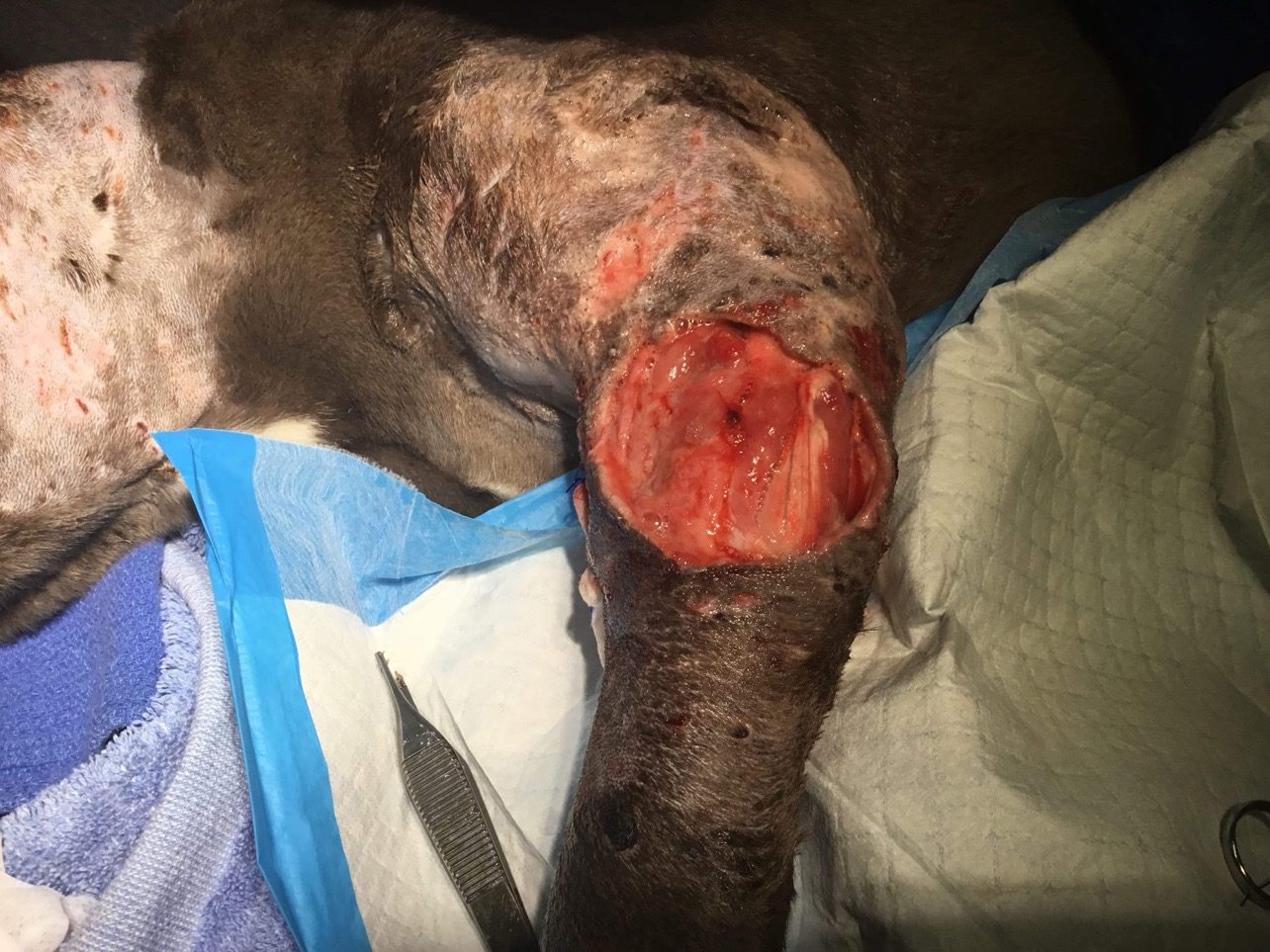
Over the next few days, he received several hyperbaric oxygen treatments to help his wounds heal and, although he was starting to walk again, it was only on 3 legs. The gangrene had continued to progress and quickly liquefied all of his Achilles tendon as well as the majority of his calf muscles. His nerve function was limited in his right rear leg and he was not able to put any weight on it. The decision was made to amputate.
After 3 days, he was stable enough to be anesthetized to remove the necrotic (dead) tissue from his wounds.
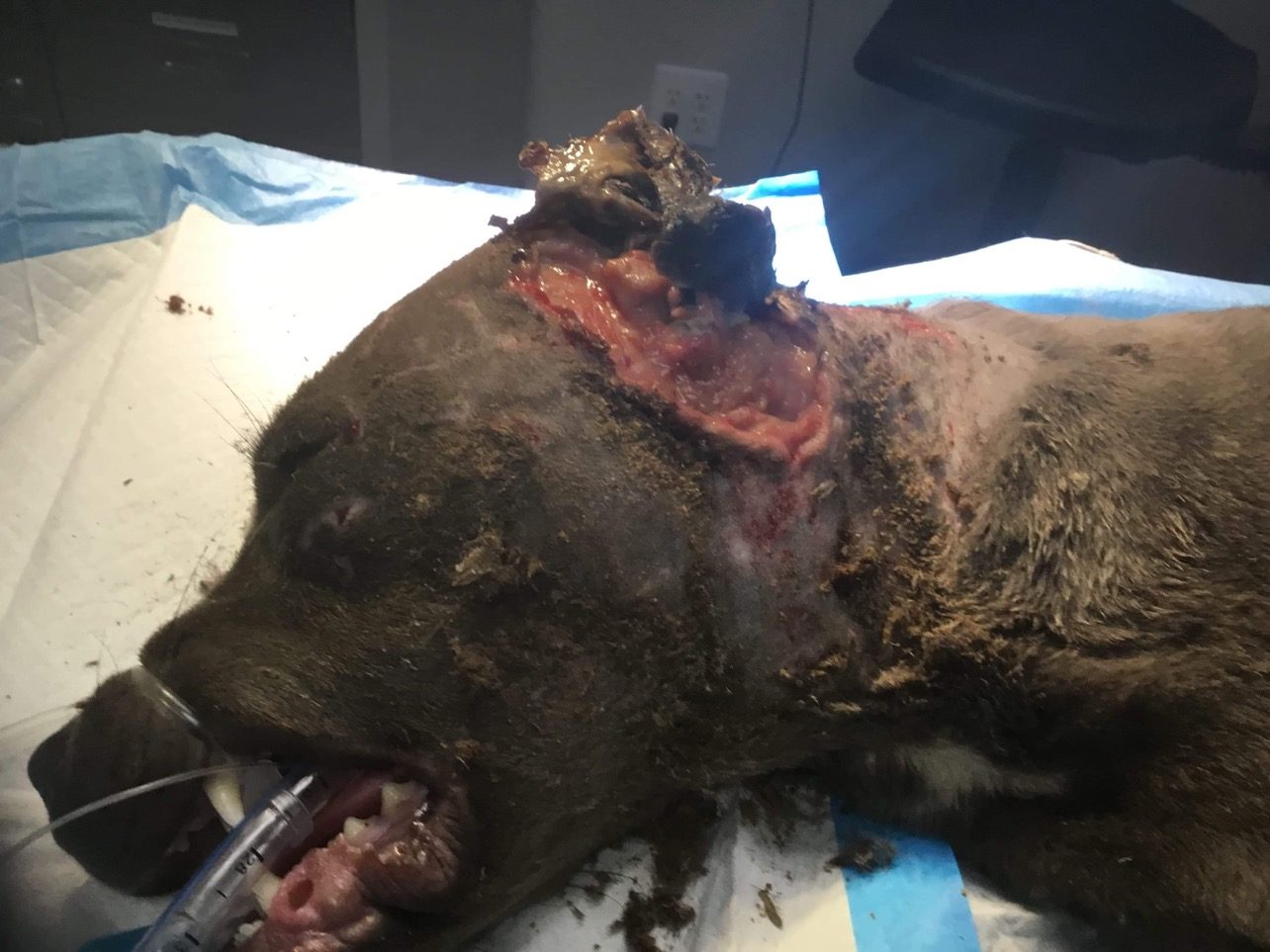
A heads-up before the next photos: they show his wounds in the first few days of his hospital stay, and some readers may find them hard to look at.
Pictures of some of his wounds over the first few days of hospitalization:
Dr. Green was returning to South Dakota for a week, so he headed back to South Dakota with her for amputation. But something amazing happened in the two days it took Dr. Green to travel home: the gangrene stopped progressing and he started putting the slightest amount of weight on his affected leg. The amputation was postponed, not knowing if his leg could be saved. For the next few weeks, he continued to receive daily bandage changes, wound management and photobiomodulation therapy to help support healing of his wounds.
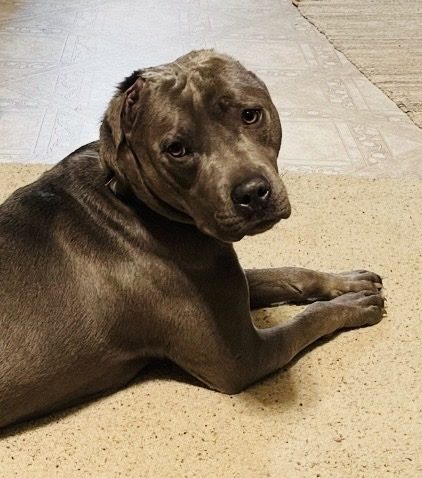
Fast forward several months: large scars have taken the place of his wounds. The floppy portion of his ears succumbed to gangrene. Instead of ears, he has “holes” where his ears used to be. He walks slightly off kilter without his Achilles tendon, BUT he still has four legs. He still jumps… just not quite as high as a normal dog. He isn’t fazed. He is now a permanent member of Dr. Green’s household.
You may have noticed throughout this blog, his name was not mentioned, as it is unknown. Now came the time to think of a name to bring light to his journey. Only one option came to mind—the name of a mythical bird that dies in a fire and is born again from its own ashes. Phoenix. While he still bears the scars, his days look quite different now.
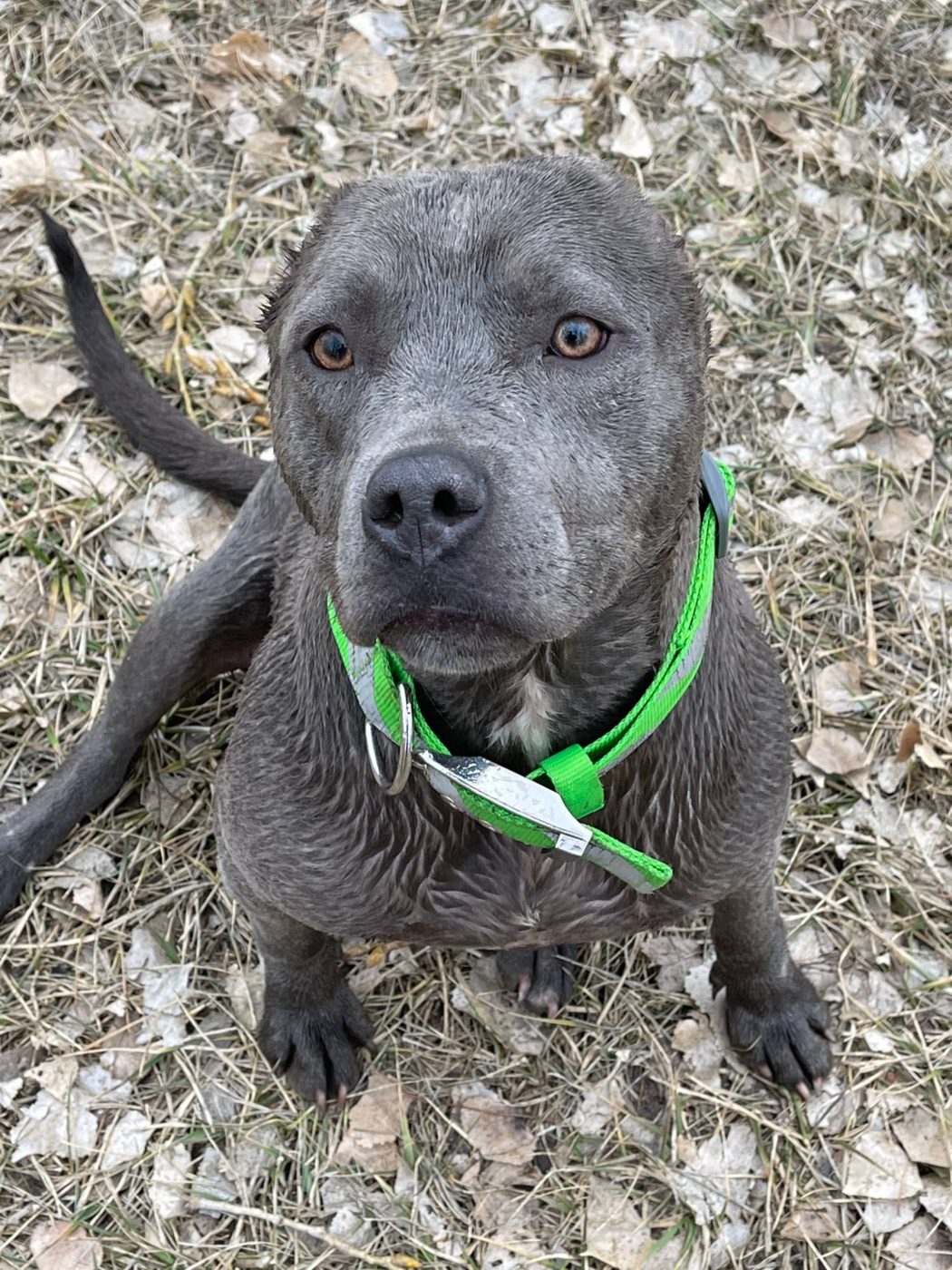
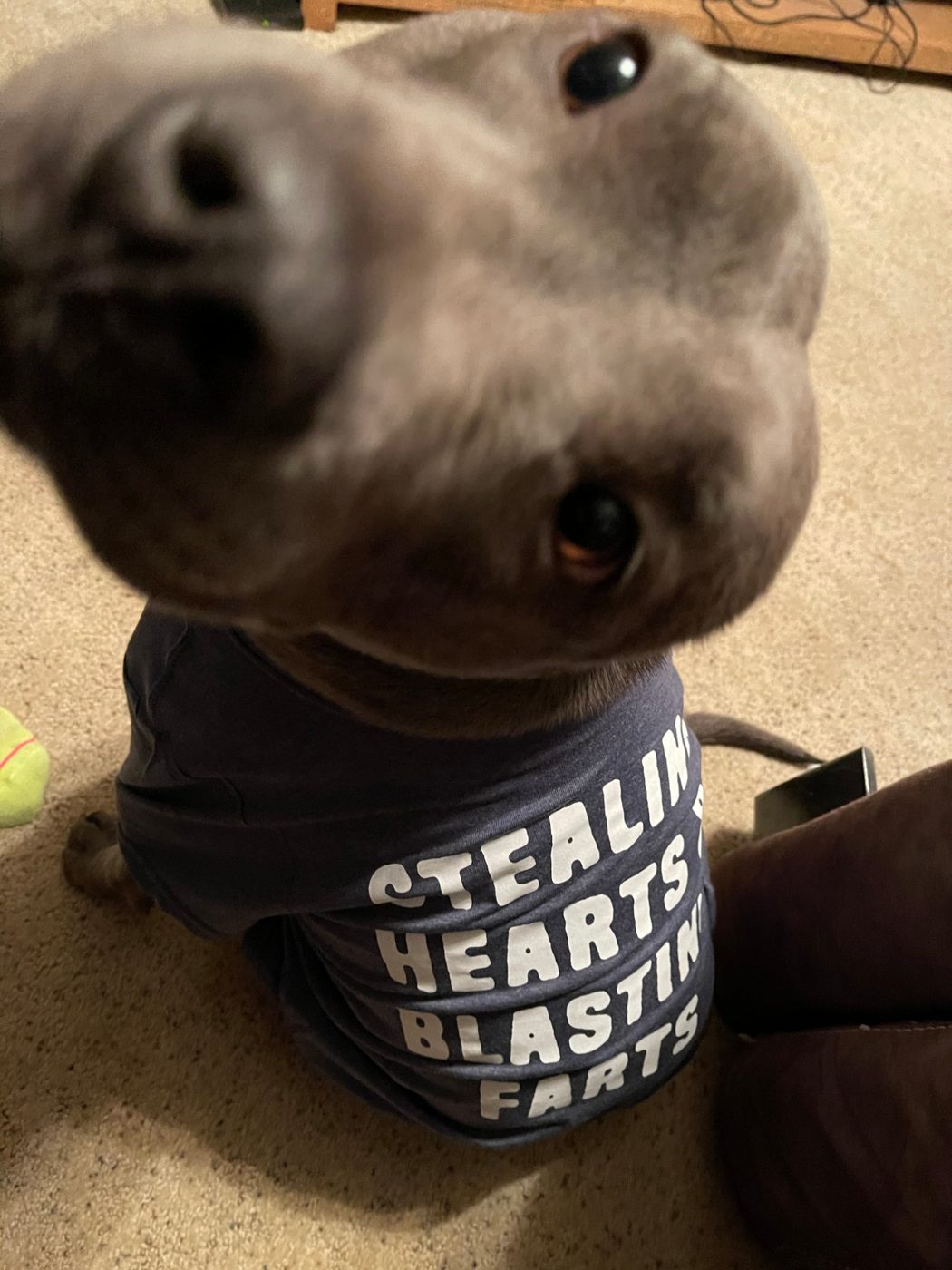
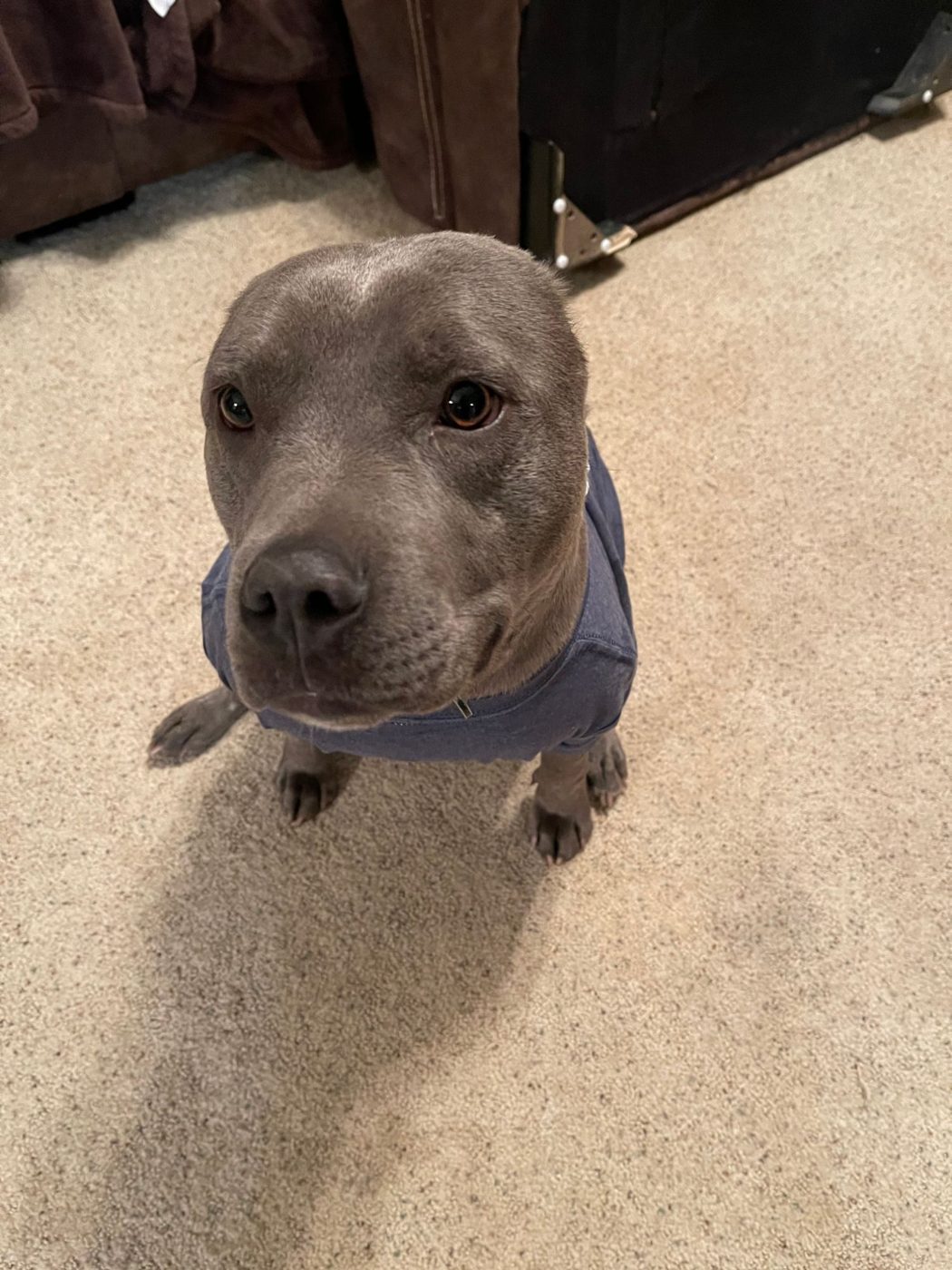
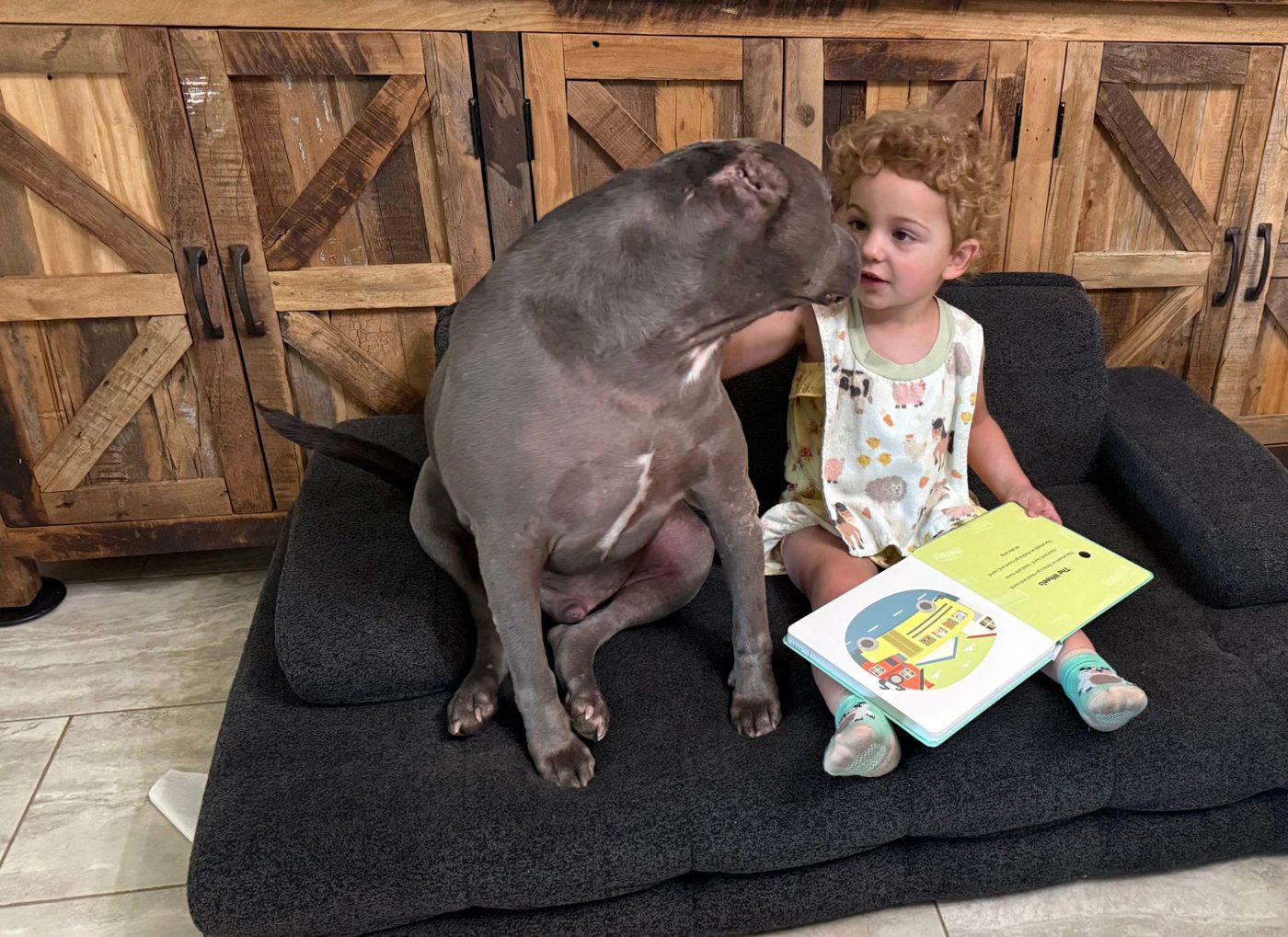
The souls that have seen the darkest days can shine the brightest light.
Lewis & Clark Veterinary Clinic